



Modern enterprises run on data—not just the data collected, but the accuracy, reliability, and timeliness of that data. Unfortunately, many organizations still rely on fragmented systems, aging data collection tools, and inconsistent data collection procedures that slow delivery and undermine business decisions. A strong data collection process isn’t simply an engineering task. It’s a strategic priority that creates operational leverage across the company.
This article refines how engineering leaders should approach their data collection architecture and the software decisions behind it. You’ll see where qualitative and quantitative data meaningfully differ, how primary data collection and secondary data sources change your approach, and what enterprise-grade capabilities matter most when choosing a data management platform that can collect data reliably at scale.
Why Data Collection Is Now a Strategic Priority
Executives continue to raise expectations on data-driven teams. According to Wavestone’s 2024 Data & AI Leadership Executive Survey, 87.9% of leaders say investments in data and analytics remain a top organizational priority. Yet only 37% report improvements in data quality, signaling that even large enterprises still face data collection issues tied to inconsistent data types, irrelevant data sources, and unreliable data collection methods.
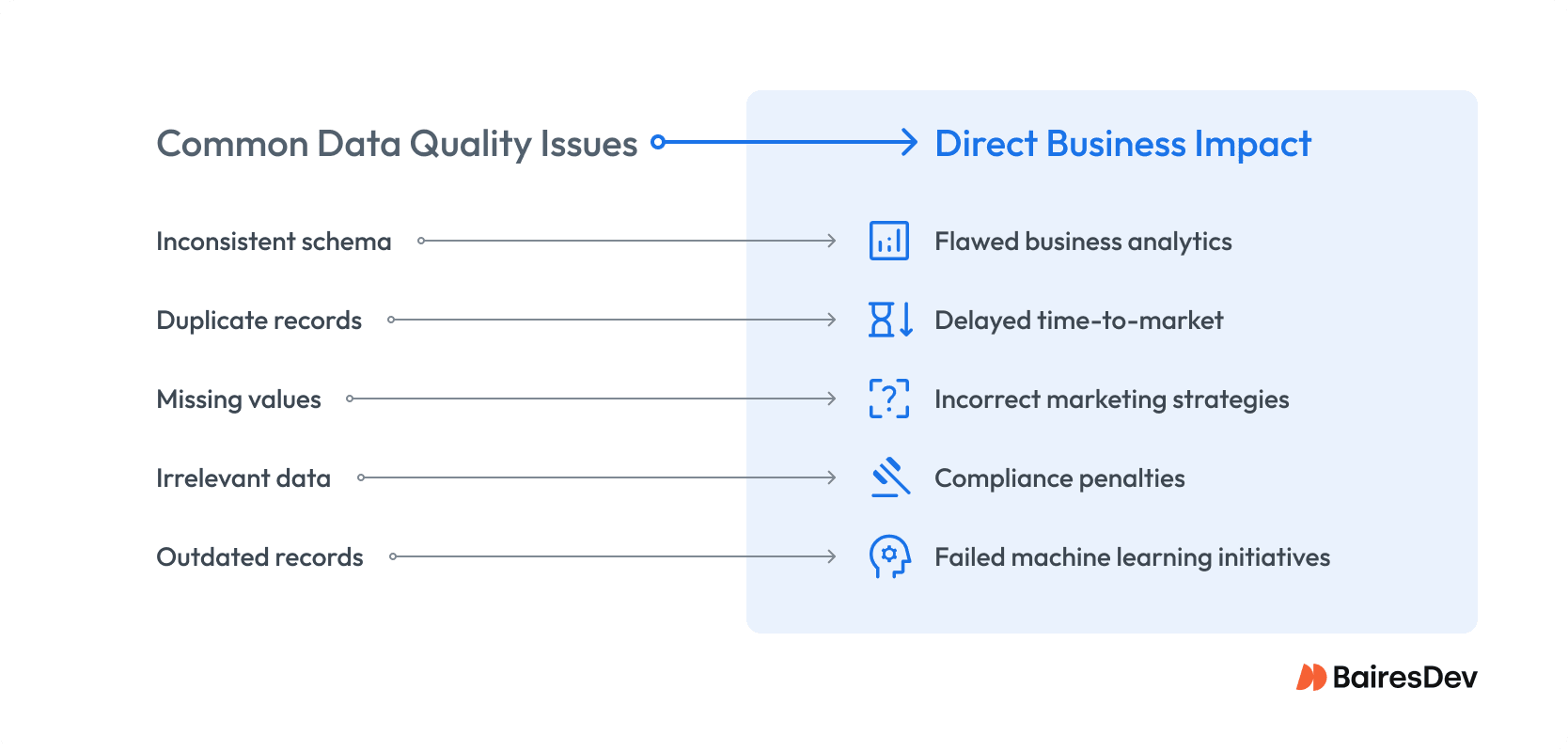
This gap affects more than reporting. Weak data collection considerations—like vague description of requirements, errors in surveys, or undocumented collection methods—lead to flawed business intelligence, broken machine learning pipelines, and slow responses to operational events. Solidifying your process of gathering data is now table stakes for any enterprise scaling its analytics or AI initiatives.
Understanding the Data Collection Landscape
Engineering leaders don’t need a textbook, but they do need a practical framing of the data types and collection methods shaping modern architectures.
Quantitative and Qualitative Data
Quantitative data includes structured, numeric information from logs, transactions, in person surveys, financial systems, mobile apps, IoT devices, and online surveys. The software supporting quantitative methods must handle volume, velocity, event ordering, and validation. Quality control is essential; otherwise raw data becomes unreliable for downstream business analytics.
Qualitative data includes human-generated content such as customer feedback, interview transcripts, support tickets, and insights gathered by a researcher conducting focus groups. These qualitative methods require flexible schema, NLP capabilities, and secure storage for human subject data.
Primary vs. Secondary Collection Methods
Primary data collection means your team controls the data gathering: application telemetry, CRM events, device instrumentation, mobile surveys, or direct interaction through product interfaces. With primary data collection methods, you control the process of gathering original data, ensuring accurate data and reducing random errors.
Secondary data collection pulls from external data sources like online databases, government agencies, third party data providers, and institutional records. Secondary data offers speed and variety, but engineering leaders must validate relevance, data integrity, scientific validity, and quality issues before trusting it.
| Data Type | Collection Methods | Data Collection Tools or Equipment | Key Software Requirements |
| Quantitative data | Logs, transactions, IoT sensors, online surveys | Sensors, telemetry SDKs, analytics scripts | High-throughput ingestion, time-series storage, real-time validation |
| Qualitative data | Interviews, focus groups, open-text feedback | Recording tools, transcription platforms | NLP capabilities, flexible schema, secure storage |
| Primary data | CRM, ERP, mobile apps, custom instrumentation | Event emitters, SDKs, API gateways | Real-time APIs, governance, strict access control |
| Secondary data | Online databases, third party data, government agencies | Connectors, ETL tools | Cleansing rules, lineage tracking, benchmarking |
Enterprise-Grade Capabilities for Data Collection Software
Choosing the right data collection software defines how well you can gather data, manage data quality, and protect the integrity of data as you scale.
Governance, Compliance, and Integrity
Strong governance keeps data consistent, auditable, and compliant. The software should support role-based access controls, encryption in transit and at rest, metadata management, retention policies, and audit logs. Enterprises handling customer data or regulated data sets need clear lineage and procedures manual documentation so business users and data scientists trust the data shared across teams.
Seamless Integration Across the Ecosystem
Data rarely stays in one place. The right tools integrate with ERP, CRM, SCM, marketing platforms, mobile apps, and internal microservices. They also connect naturally to major cloud data infrastructure. Your data collection equipment—SDKs, collectors, agents—should map to the rest of your architecture without custom rework.
Real-Time and Streaming Capabilities
Batch ETL still has its place, but modern data systems often depend on real-time streaming. Your software should support:
- Low-latency ingestion
- Event-driven triggers
- Edge computing when collection methods include distributed devices
- Real-time quality control to prevent bad data from polluting analytics
AI-Readiness and MLOps Alignment
To ensure that data supports AI initiatives, your system needs:
- Versioned data sets
- Transformation layers for training and inference
- Tools that integrate into MLOps workflows
- Guardrails that prevent irrelevant data from entering model pipelines
Empowering Business Users Without Sacrificing Control
Self-service access is vital for speed. A robust platform exposes governed data catalogs, low-code query interfaces, and clear documentation so non-technical users can conduct surveys, analyze customer feedback, or filter relevant data without creating shadow systems.
Observability and Monitoring
Observability prevents small quality issues from becoming bigger data collection problems. Monitoring tools should track:
- Completeness
- Anomalies
- Latency
- Schema drift
- Freshness
- Duplicate records
- Outliers that point to collection methods failure
Scalability and Resilience
Your software must scale automatically as you gather data from more systems and more types of data. Resilience—high availability, disaster recovery, and hardened security—is non-negotiable at the enterprise level.
Managing Backup, Retention, and Compliance
Retention policies, automated archival, immutable logging, and data privacy controls are essential for regulated industries. This ensures you store data safely without inflating costs.
Strategic Implementation: Partnering for Acceleration
Engineering teams often operate at or near capacity. When the research timeline for a new architecture is tight, a staff augmentation partner can deliver:
- Data engineering support to design collection methods
- Cloud, security, and integration expertise
- Quality assurance teams for establishing monitoring
- Fast deployment across mobile apps, core systems, and external data sources
This model helps enterprises evaluate outcomes quickly and ensures accurate data collection early in the lifecycle.
The Strategic Advantage of Better Data Collection
Better data collection leads directly to better business intelligence, stronger business analytics, clearer data reports, and more reliable insights. A well-designed architecture lets you gather data consistently, protect integrity, and accelerate everything from reporting to experimentation.
What Engineering Leaders Should Do Next
- Audit your current data sources, data gathering process, and collection methods.
- Prioritize requirements tied to governance, quality control, and business users.
- Run a pilot using both quantitative methods and qualitative methods where appropriate.
- Validate with downstream teams—analytics, data scientists, operations.
- Iterate until primary data collection and secondary data workflows stabilize.
When done well, a modern data collection process strengthens every downstream workflow—from business intelligence dashboards to AI-enabled features. Engineering leadership sets the standard for reliable, consistent, enterprise-grade data.