

Last Tuesday, three wire transfer scam emails slipped past your filter in under ten minutes. Two people hesitated. One clicked. That’s all it takes.
If you manage payroll, patient data, or e-commerce systems, you don’t need a perfect security stack. You need a few high-leverage moves that make the difference between a breach and a quiet Tuesday, and a strong security posture that compounds over time.
Attackers move fast. Your defenses can’t afford to lag. Now’s the time to recheck your posture: audit what you have, fix the easy gaps, and map your next steps against security risks. This guide offers practical cybersecurity practices for engineering leaders, especially those managing fast-scaling teams.
Understanding Common Cyber Threats
Cybersecurity threats aren’t abstract. Most breaches still rely on one thing: human error. One of the first steps to promoting effective cybersecurity is understanding what you are securing against.
- Malware: Includes viruses, trojans, and spyware. Often disguised as legitimate files or downloads, malware can spread rapidly across a network, corrupting data and degrading systems.
- Ransomware: A malware subtype where attackers lock or exfiltrate data and demand cryptocurrency payments. Even when paid, there’s no guarantee you’ll regain access.
- Phishing: Deceptive emails or messages trick users into revealing credentials or downloading malware. These often mimic internal emails or trusted third parties.
Most of these attacks still require a human action somewhere, usually a click, a download, or sharing credentials. That’s why technical controls and user training on how to improve cybersecurity are essential, starting with basic security practices and maturing into formal programs.
Test Current Systems
If you don’t have someone on staff who can perform this testing, consider hiring an ethical hacker to help. Don’t forget about devices you might have added recently, such as Internet of Things (IoT) sensors, which create new attack vectors.
You should also test your employees to find out how savvy they are at recognizing phishing and other types of cyberattack attempts. Software and services are available to regularly send false attempts and track how many workers take the bait.
Once you have performed testing and identified possible risks, prioritize these vulnerabilities to determine which ones to address first. Then, set a regular schedule for testing, identifying attack vectors, and updating your plan (see below). Make sure key personnel are assigned and accountable.
Build a Resilient Cyber Playbook
Once you’ve mapped your weak spots, define a cybersecurity roadmap.
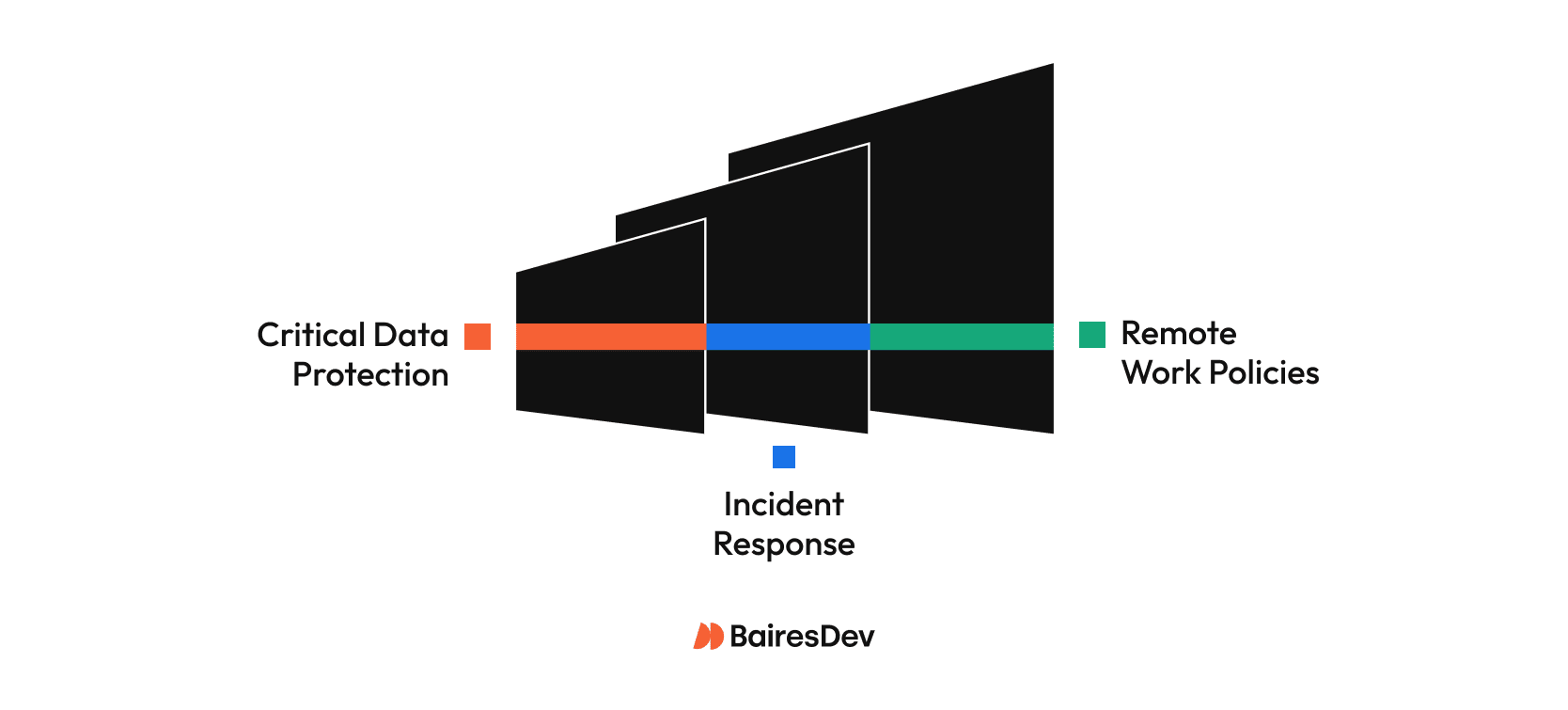
Start with:
- Critical data protection: Prioritize backups, versioning, and secure storage for sensitive IP, financial data, and customer records.
- Incident response: Document what happens in a breach scenario—who’s responsible, what gets shut down, and how comms are handled, including escalation paths for financial institutions and regulators.
- Remote work policies: Ensure all WFH environments meet minimum standards for secure access, device management, and network security hygiene.
Make security part of your operating rhythm. Integrate reviews with quarterly planning and release cycles.
Develop a Cybersecurity Strategy
Based on the testing you perform, you should get a sense of which systems or features are the most vulnerable to attack. Create a plan, timeline, and budget to address each one.
Ensure your plan includes measures to protect critical data, such as regular backups and secure storage solutions, to maintain business continuity in case of a cyber attack.
Part of your plan should be specific steps for what to do in the event of a ransomware attack, which is more complicated than it may first appear.
Additionally, make sure your plan includes work-from-home (WFH) action items. While remote working can accelerate efficiency and employee satisfaction, it can also increase cybersecurity risks since employees don’t necessarily have access to the best network equipment and IT support.
Securing Your Network
Securing your network is foundational. At a minimum, ensure strong authentication for all users, keep operating systems and software patched, segment critical systems from general user networks, and use VPNs or secure access tools for remote connections.
Firewalls and intrusion detection or prevention systems should be configured and monitored continuously, with clear playbooks for responding to suspicious activity.
Basics still matter. One of the first steps is to set up a wireless access point with a secure service set identifier (SSID) and use a virtual private network (VPN) to safeguard your network from unauthorized access. Implementing a separate user account for each employee and requiring strong passwords can help prevent unauthorized individuals from gaining access to your network.
It’s also crucial to keep your operating systems and software up to date with the latest security patches to reduce vulnerabilities and prevent malicious code from infecting your network.
Shore Up Defenses
By following assessment and planning, you’ll be ready to take action against the current threat landscape. While each company’s list of activities will be unique, here are some possible steps you might want to take.
- Update software. Make sure systems and software, especially antivirus software, are up to date, including patches and security updates.
- Institute or improve password management practices. For example, you could create rules about password complexity or require employees to use a password manager.
- Use multifactor authentication (MFA). Even the most complex passwords aren’t enough to protect devices and applications any longer. MFA requires the use of a secondary process on their mobile devices to gain access.
- Back up data. This step is critical because any kind of cyberattack will likely destroy or block access to data. Ideally, both onsite and offsite methods should be employed. Periodically test the backups to be sure you can retrieve your data if needed.
- Train employees. Professionals are often the easiest targets. Provide regular, practical training on phishing, password hygiene, and safe handling of attachments and links. Refresh content frequently so staff stay aware of evolving threats.
- Hire additional experts. If your IT team is stretched too thin to perform assessments, create a plan, train employees, and deploy additional strategies, consider hiring additional staff, outsourcing, or hiring a vendor to work with you temporarily to get your cybersecurity up to speed.
- Utilize anti-fraud services. Secure payment systems and protect against unauthorized transactions by employing trusted tools and collaborating with banks or processors.
Employee Education and Training
Providing regular training on cybersecurity best practices, such as using strong passwords and being cautious when opening emails and attachments, can help prevent security incidents.
In practice, this means that regular reviews and updates of employee training programs can ensure that employees are aware of the latest cyber threats and best practices.
The Importance of Sensitive Data
Sensitive data is a direct business risk. Breaches damage trust, create legal exposure, and disrupt operations. Yet many companies still treat data security as an afterthought.
If you’re not regularly reviewing your security posture against real risks, you’re exposed.
BairesDev supports enterprise clients with secure-by-design engineering talent, modern DevSecOps practices, and AI-enabled threat modeling expertise. Whether you need to close a talent gap or harden systems ahead of a product launch, we can help reduce risk without slowing you down.